Have you ever had one of those weeks when several competing priorities, all important seem to come at you at once?
If you are part of the educational community, I think it’s safe to say you can probably relate.
Last week was one of those weeks for me. Actually, if I’m being fair, almost every week has moments that feel this way.
There were important priorities at the student, teacher, and administrator levels, and just about everywhere in between. By the end of the day on Friday, I could feel that my gas tank was running on empty.
I could feel it.
And my literacy coaches, who I think the world of, know me well enough that I think they could see it on my face, too.
At that moment, I was in the middle of creating what felt like the hundredth iteration of an important communication that needed to go out to a large part of our educational community. I was struggling with the technology. Obstacles I hadn’t anticipated kept getting in the way. Something that should have been relatively straightforward suddenly wasn’t.
And I have to admit, I was getting pretty frustrated.
Then one of my coaches walked over, put her hands on my shoulders, looked at me, and simply said: “Lauren, you can do this.”
I turned around and looked at her.
“Thank you. Yes. Yes, I can. I can do this.”
And I did.
I got back to work, focused on the task in front of me, worked through the obstacles, and successfully got the communication out.
Nothing about the actual task had changed. The technology hadn’t suddenly started cooperating. My to-do list hadn’t gotten any shorter. I was still tired.
But something had changed. My situation had changed.
The People in Our Situation
The following morning, I was excited to open Angela Duckworth’s new book, Situated. I had been looking forward to reading it, but I didn’t expect the prologue to connect so immediately to something that had happened less than 24 hours earlier.
Duckworth explores the idea that perseverance is not simply about pushing harder or relying on sheer willpower. The situation around us matters, too. Culture matters. Mentors matter. Teammates matter. The people around us can influence how we think, what we believe is possible, and what we are willing to do next.
And then I came across four words that immediately connected me back to the afternoon before:
“I can do this.”
There they were again. The same four words my literacy coach had given me the afternoon before. I kept thinking about that.
Nothing about the actual task had changed. The technology had not suddenly started cooperating. My list of priorities was still long. I was still tired.
But my thinking had shifted. And sometimes, I think, the voice that helps shape our thinking is not our own. Sometimes someone else lends us theirs.
You can do this.
That is what struck me most about Duckworth’s message. Grit matters, but grit does not exist in a vacuum. The situation matters, too.
I would add one more to her list.
Colleagues matter. The people beside us matter.
Because sometimes the difference between feeling stuck and taking the next step is another person helping us remember what we already carry within ourselves.
As leaders, we spend so much time thinking about how we can develop people: professional learning, coaching, feedback, resources, structures, schedules, goals.
All of those things matter. But sometimes we overlook the influence we have over the situation someone is experiencing in a single moment.
Sometimes our leadership is simply part of someone else’s environment.
Our presence. Our words. Our belief in them.
And those things can change what happens next.
The Small Things Matter
In my book, The Leader Inside, I wrote:
“You don’t have to search for the big things to see good things happen. The small things matter, too.”
I believed that when I wrote it. I believe it even more now.
My coach probably had no idea that four words would stay with me long after the communication went out.
But they did.
That is one of the beautiful things about working alongside people. We may never fully know which interactions become part of someone else’s story.
Another idea I explored in The Leader Inside was that “your actions create a collection of stories that can positively impact others.”
That Friday afternoon is now part of mine.
And it makes me wonder how many opportunities we have every day to become part of someone else’s situation in a way that helps them keep going.
A teacher trying something new. A student who is beginning to doubt themselves. A colleague walking into a difficult conversation. An aspiring leader who isn’t quite sure they are ready.
Someone carrying more than we realize.
We may not be able to change everything surrounding them. But perhaps we can change something.
Three Things You Can Do Tomorrow
Leadership doesn’t always require a new initiative. Sometimes it requires paying closer attention to the people already around us.
So, with that, I invite you to try three simple things tomorrow:
- Notice someone.
Slow down long enough to really see the people around you. Who looks overwhelmed? Who is stretching into something new? Who is quietly doing extraordinary work that may be going unnoticed? - Name what you see.
Tell someone what you recognize in them. Be specific. “I saw how patient you were with that student.” “You handled that conversation thoughtfully.” “You have a gift for bringing people together.” Sometimes other people see our strengths before we can see them ourselves. - Remind someone what is possible.
There are moments when people don’t need us to solve the problem. They need us to believe in their ability to move through it. A few words at the right moment can change the situation.
Maybe even four.
You can do this.
And Maybe You Need to Hear It, Too
I started this post by asking whether you have ever experienced a week when everything important seemed to be coming at you at once.
Maybe that week is this week. Maybe your gas tank is running a little closer to empty than you would like anyone to know.
Maybe there is a conversation you need to have, a decision you need to make, a problem you haven’t figured out yet, or something sitting on your desk that feels harder today than it normally would.
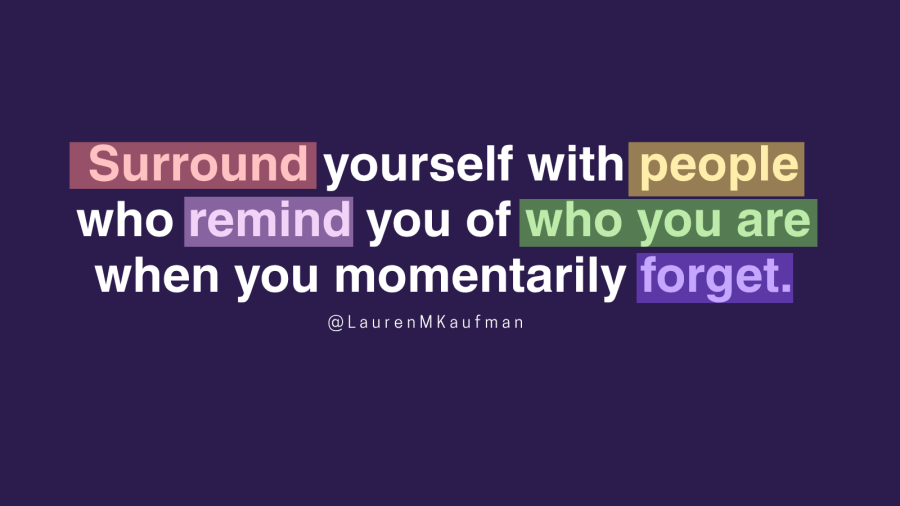
Surround yourself with people who remind you of who you are when you momentarily forget.
Be that person for someone else, too.
Because, as I wrote in The Leader Inside, “The people who cross your path could take a piece of you with them.”
What piece will you give them? Sometimes it may be your wisdom. Sometimes your encouragement. Sometimes your trust. And sometimes it might simply be four words offered at exactly the right moment.
So if you are the one who needs to hear them today, let me be the one to say them to you.
You can do this.
Discover more from Empower. Collaborate. Connect.
Subscribe to get the latest posts sent to your email.

