“You will always have Long Beach sand in your shoes, no matter where you go.”
Years ago, I used to share those words with new teachers as I handed each of them a tiny vial of sand from the beach community we taught in. At the time, I thought I was giving them a reminder of where their journey began. A reminder that no matter where their careers took them, the people, experiences, and community that helped shape their first years as educators would always travel with them.
I’m realizing now that maybe I was giving myself that reminder, too.
One of the things I love most about having this space to write is that it gives me a place to reflect on my learning as it is happening, but also to return to it years later. Sometimes we write something because we understand it in one moment, and then life gives us an experience that helps us understand our own words differently.
And sometimes, the universe puts someone back in our path when we need to remember something.
Recently, at my sons’ Back-to-School Night in the district where I once worked, I ran into an educator I had not seen in quite some time.
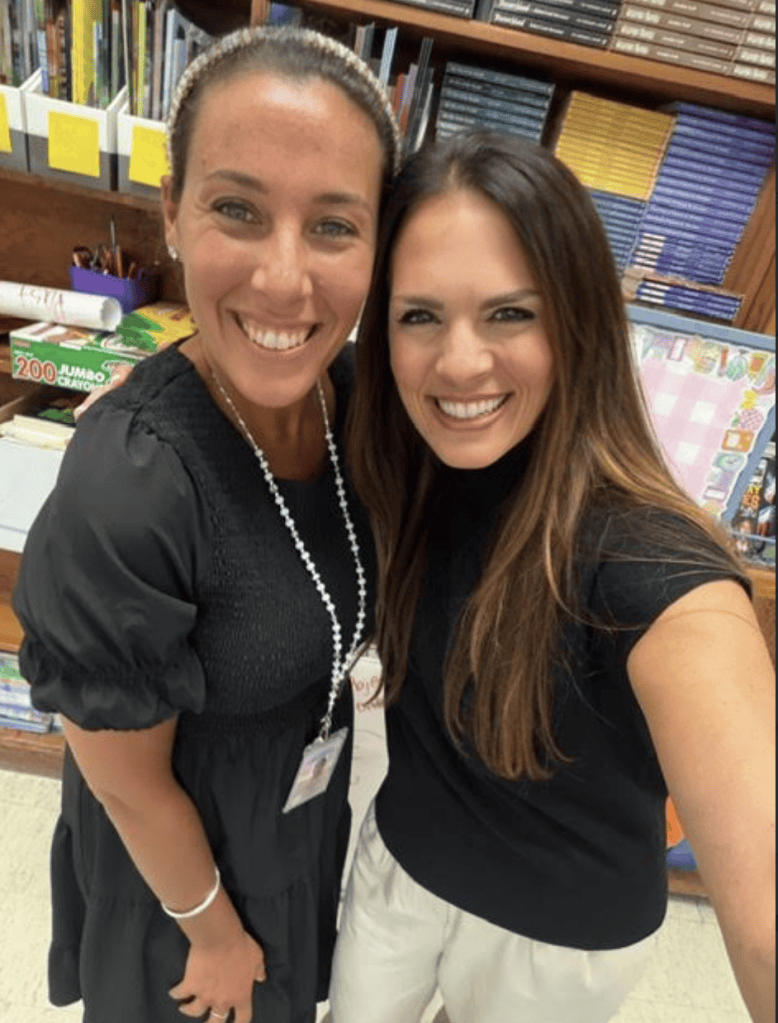
The moment we made eye contact, Brianna and I practically ran into each other’s arms. We were so excited to see one another that it didn’t take long for us to realize just how loud we were being—and that we were probably disrupting the other Back-to-School Night sessions happening around us. Laughing, she quickly pulled me into her classroom so we could catch up.
I had been the mentor coordinator during Brianna’s first year of teaching, and as we talked, she shared that I had made a meaningful impact on her journey as an educator. She remembered the little vial of sand I had given each new teacher, along with the message, “You will always have Long Beach sand in your shoes, no matter where you go.”
And then she told me she still has it.
All these years later.
She also shared that she has gone on to serve as a mentor several times herself. And in that moment, I could see how something that began years ago had continued far beyond that first year.
As we continued talking, I looked over at the bookshelf in her classroom and noticed The Innovator’s Mindset by George Couros still displayed there.
That book was an important part of our mentor program. We read it, talked about it, questioned our practices through it, and used it as a way to think differently about teaching, learning, and leadership.
Seeing it sitting there all these years later stopped me for a moment. The sand. The book. The teacher who was once a brand-new educator was now mentoring others.
And suddenly, I was thinking about words I had written more than five years ago.
Mentorship Matters
In January 2021, I wrote a post called Mentorship Matters: 8 Tips for Developing a Strong Mentor Program.
At the time, I was reflecting on my work as a K–12 Mentor Coordinator and the responsibility we have to create strong foundations for educators during the earliest years of their careers.
I wrote:
“Teaching is not just something you do, it’s a calling; it’s a beautiful gift; it’s an opportunity to unleash the talents within every human being you encounter; it’s a time to cultivate powerful relationships that have the chance to stand the test of time.”
Those words feel different to me today. I believed them then. I have lived them since.
And years later, I found myself returning to that same idea in my own book, The Leader Inside. “Teaching is not just something you do” stayed with me because teaching, leadership, mentorship, and learning have never felt like things we simply do. They become part of who we are.
Back in 2021, I also shared eight practices I believed could help build a strong mentor program:
- Align with State Mentoring Standards — Create a strong foundation for induction and meaningful professional learning.
- Provide Voice and Choice — Give new teachers opportunities to shape the learning they need.
- Build Professional Learning Communities — Create spaces rooted in trust, connection, collaboration, and shared learning.
- Select a Professional Book as a Framework — Use meaningful texts to anchor conversations and stretch thinking.
- Invite Other Voices — Elevate the expertise within your organization while bringing in perspectives that can broaden thinking.
- Create a Digital Footprint — Make learning visible so educators can share ideas, practices, and inspiration with one another.
- Stay Connected and Networked — Learn beyond the walls of your own organization and remain open to new possibilities.
- Give Recognition — Notice people. Celebrate their work. Help them know that what they contribute matters.
Looking at those eight ideas now, I realize they were never really just about designing a mentor program. They were about creating the conditions for people to grow.
And that night, standing in Brianna’s classroom, I was looking at what can happen when we do. She had been mentored. She grew. She became a mentor herself.
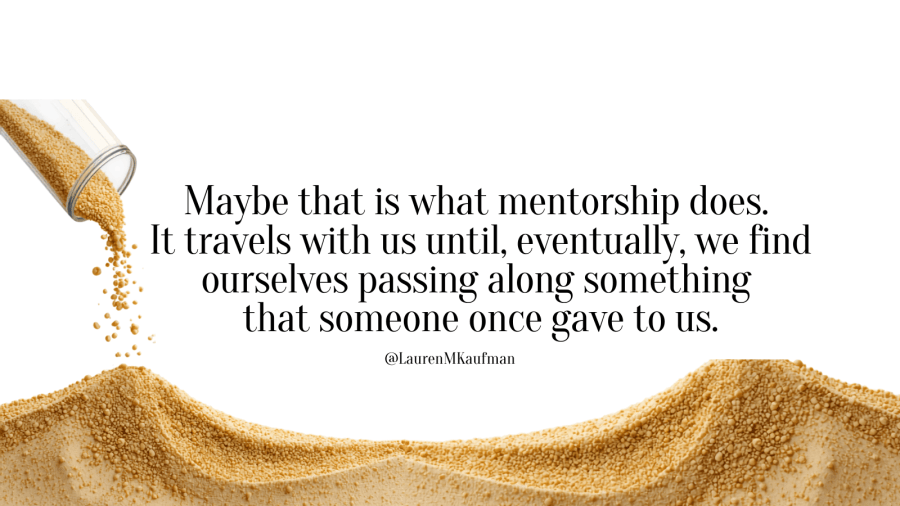
Maybe that is what mentorship does. It travels with us until, eventually, we find ourselves passing along something that someone once gave to us.
The impact was never supposed to stop with one person.
The Book on the Shelf
Seeing that book on Brianna’s shelf brought me back to another beginning. The Innovator’s Mindset stretched my thinking at an important time in my leadership journey, but it was more than the ideas in the book. George’s encouragement to share our learning helped nudge me toward putting my own thinking into the world.
So I started writing.
At first, it was this blog. A place to make my learning visible, work through ideas, document experiences, and share stories that I hoped might resonate with another educator.
I certainly wasn’t thinking, Someday I am going to write a book.
I was simply reflecting. Learning. Paying closer attention to the moments that were shaping me.
But the posts kept coming. The stories kept coming. The reflections kept coming.
And eventually, that writing became The Leader Inside.
So there was something especially meaningful about standing in Brianna’s classroom, seeing The Innovator’s Mindset still sitting on her shelf, and getting to share with her that somewhere along the way, I had written a book of my own.
When I think about it now, perhaps that chapter of my life was already helping me write my first book before I even knew I was writing one.
All of it became part of the story: the people, the conversations, the mistakes, the learning, the relationships, and the moments that made me stop and think about who I was becoming as a leader.
And I intentionally say my first book because I know there is another one in me.
In many ways, I think pieces of it are already living right here in this space.
What We Carry Forward
Every year in my current district, I have the opportunity, now as a district leader, to spend time with the educators in our mentor program.
And every single year, I feel incredibly connected to that work. There is always a little nostalgia mixed in. Now I understand why.
Facilitating a mentor program taught me so much about listening, learning, creating opportunities for others, building community, noticing people, and recognizing the gifts they already carry within them.
That work helped shape the leader I am and still becoming today.
So when I walk into a room filled with mentors and new teachers now, part of me travels backward and forward at the same time.
I remember what it felt like to lead that work then and I think about the responsibility we have to the educators beginning their journeys now.
And I understand more deeply that we may never fully know which conversations, books, questions, gestures, or moments will stay with someone.
A tiny vial of sand seemed like such a small thing.
A book sitting on a shelf may seem like a small thing.
A conversation during someone’s first year may feel like one of hundreds we have throughout a career.
But small things have a way of becoming part of someone’s story.
And sometimes, if you are really lucky, you get to find out.
What Travels With Us
Maybe that is why I am so grateful for this space. Writing has allowed me to reflect on the educator I was and who I am still becoming through this process.
I can return to who I was, what I believed, what I was learning, and what mattered to me at different points in my journey.
When I reread that old post, I noticed that I had written about creating a foundation that would support educators during their first years of teaching and for the rest of their educational journeys.
I don’t think I completely understood the weight of those words when I wrote them.
But I do now.
Mentorship is not confined to a program. It isn’t a meeting schedule. It doesn’t end when someone’s first year does.
The best mentorship travels. It becomes part of how we teach. How we lead. How we encourage someone else. How we notice people. How we create opportunities for the next person. It gets passed along.
Just like sand.
“You will always have Long Beach sand in your shoes, no matter where you go.” I said those words to new teachers because I wanted them to remember where they started.
All these years later, the universe placed Brianna back in my path and reminded me that I carry that sand, too.
We carry people. We carry places. We carry books, conversations, moments, and pieces of learning that helped shape who we became.
And if we are fortunate, we take those pieces with us and pass them along to someone else.
Brianna still has the vial. She still has the book. She became a mentor herself. I kept writing.
And somewhere along the way, those experiences helped me write a book of my own.
The vial may have been hers. But this time, the reminder was mine.
Somehow, the sand keeps traveling.
And maybe our stories do, too
Discover more from Empower. Collaborate. Connect.
Subscribe to get the latest posts sent to your email.


Another beautiful & meaningful piece of writing written by beautiful, thoughtful and intelligent you.🩷Sent from my iPhoneOn Sep 16, 2026,
LikeLiked by 1 person
Thank you as always for your support and encouragement! 💜
LikeLike
nice blog..
keep going..https://vcubesoftsolutions.com/
LikeLike
Thank you for reading it!
LikeLike