Have you ever felt like your days are moving from one item to the next? Meeting to meeting. Task to task. Conversation to conversation.
I am going to assume that no matter what field you are in, this happens.
There are times when I feel fully present, savoring the moments and appreciating what is unfolding around me. There are other times when the pace of the day requires me to be much more intentional about slowing down and noticing what is happening right in front of me. Leadership can be like that. The demands are real, and often the work requires us to move quickly from one priority to the next while still remaining focused on the people and purpose behind the work.
Last week, I had a bit of a wake-up call. One of my colleagues said to me, “Lauren, you did great today.”
I replied, “What did I do great at today?”
She laughed and said, “The meeting you facilitated.”
The truth is that I hadn’t forgotten about it, but I had already moved past it. Not because the meeting wasn’t important, but because I had immediately shifted my attention to the next responsibility. Between a full day of meetings, ongoing priorities, and the first evening of my summer doctoral classes, I had not given myself the opportunity to pause, process, and reflect on what had happened.
Can you relate?
That interaction stayed with me. Not because I needed the compliment, but because it made me realize how quickly I had moved past a meaningful moment. That day, I had not yet stopped to process it, learn from it, celebrate it, or even acknowledge it.
The interesting part is that the day before felt completely different.
I had spent the day in classrooms observing lessons from literacy resources we are currently piloting. I watched students engage with texts, discuss ideas, collaborate with one another, and apply their learning independently. I listened to teachers share their experiences, their celebrations, and their challenges. We talked about implementation, student engagement, instructional shifts, and the realities of bringing new resources into classrooms.
As I reflected on that day, I realized how energized I felt.
Now, this is not a story about one part of leadership being more important than another.
The stakeholder meeting mattered. The planning mattered. The coordination mattered. The systems mattered.
In education, operational systems drive academic systems. The meetings, budgets, schedules, communication plans, professional learning opportunities, curriculum work, and implementation structures create the conditions that allow teaching and learning to thrive. As leaders, it is our responsibility to ensure those systems are strong, coherent, and focused on what is best for students.
Without those systems, the work inside classrooms becomes much more difficult.
What the classroom visits reminded me of was something different. They reminded me of the moments where I feel most connected to my purpose.
As I spoke with teachers, listened to students, observed instruction, and learned alongside others, I realized that I was fully present. I was curious. I was energized. I was learning.
I realized I was in frame.
The other day, I was listening to my friend Lainie Rowell’s Evolving with Gratitude podcast featuring Jim Collins. When I saw he was the guest, I immediately pressed play. I had just started reading his newest book, What to Make of a Life, and like many aspiring leaders, his book Good to Great had a profound impact on me years ago. I often joke that Jim Collins has mentored me through his books and research throughout my leadership journey.
During the conversation, Collins discussed the ideas of “encodings” and being “in frame.” He describes encodings as the natural capacities that exist within us, waiting to be discovered through life’s experiences. They are different from strengths, which can be developed through hard work and practice. Encodings are the things that feel deeply aligned with who we are and how we are naturally wired.
He goes on to describe being “in frame” as those moments when our work aligns with those encodings. We feel energized, engaged, and fully present. Not because the work is easy, but because it fits.
As I listened, I found myself thinking about the classroom visits. I thought about the conversations with teachers. I thought about the student discussions. I thought about the questions, the observations, the learning, and the reflection.
And I realized that throughout every role I have held in education: classroom teacher, literacy specialist, instructional coach, assistant principal, district leader, and now doctoral student, the moments that have brought me the greatest sense of fulfillment have involved learning alongside others.
They have involved curiosity. They have involved growth. They have involved helping others see possibilities they may not yet see in themselves.
As I reflected on Collins’ ideas, I was reminded of something I wrote in my book, The Leader Inside:
“Gifts live within exceptional educators, waiting to be unwrapped at the right place, at the right time, with the right people.”
Perhaps that is what Collins is describing when he talks about encodings.
The gifts are already there. The potential is already there. Sometimes it takes the right experience, the right challenge, the right mentor, or the right moment to help us see them.
The colleague who reminded me about the meeting helped me see one thing. The classroom visits helped me see another.
Both were important. Both mattered. Both offered clues.
As leaders, we spend so much time helping others discover their strengths, talents, and potential. We create opportunities for students and colleagues to reflect, grow, and learn more about themselves. Yet sometimes we move so quickly through our own days that we fail to notice the moments that are teaching us something about ourselves.
What if we paid closer attention?
What if we created space to reflect not only on what we accomplished, but on what energized us?
What if we noticed the moments where we felt most connected to our purpose?
What if we paid attention to the work that fills our bucket rather than simply checking it off our list?
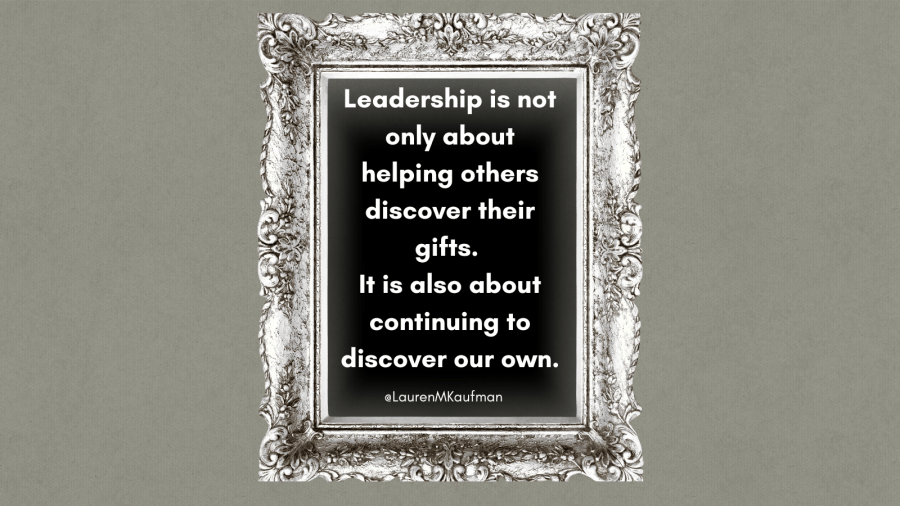
The more I think about that conversation with my colleague and the ideas Collins shared, the more I realize that leadership is not only about helping others discover their gifts. It is also about continuing to discover our own.
The clues are often right in front of us. They are found in the conversations we remember long after they end. They are found in the work that energizes us. They are found in the moments when we feel fully present. They are found in the moments when we are in frame.
And perhaps if we slow down enough to notice them, they can help us better understand not only what we do, but who we are becoming.
Three Ideas Leaders Can Implement Tomorrow
1. Create Space to Notice What Energizes You
At the end of each day, spend five minutes reflecting on a simple question:
What energized me today?
Do not focus only on what you accomplished. Focus on the moments that left you feeling curious, engaged, and connected to your purpose. Over time, patterns begin to emerge. Those patterns may offer clues about where you are most “in frame.”
2. Pay Attention to the Clues Others Provide
Sometimes other people notice our strengths and contributions before we do. A colleague’s comment, a teacher’s feedback, a student’s response, or a simple thank you can serve as a mirror.
Instead of quickly moving on to the next task, pause and ask yourself:
What might this moment be teaching me about myself as a leader?
Often the clues are right in front of us.
3. Balance Systems and Purpose
Great leaders understand that operational systems drive academic systems. The meetings, schedules, budgets, communication plans, and implementation structures matter because they create the conditions for teaching and learning to thrive.
At the same time, do not lose sight of the moments that connect you to your purpose. Make time to visit classrooms, talk with students, learn alongside teachers, and engage in the work that reminds you why you became an educator in the first place. The goal is not to choose one over the other, but to recognize how both contribute to meaningful leadership.
Discover more from Empower. Collaborate. Connect.
Subscribe to get the latest posts sent to your email.

