This week, as I sat in meetings and one-on-one conversations, I noticed something. There were moments where it felt like educators and leaders didn’t need another initiative or plan. They needed space…space to talk, to process, and to be heard.
In my book The Leader Inside, I share that “the people who cross your path could take a piece of you with them is special. Your impact and influence can be infinite.” I carried that reminder with me this week, that every interaction leaves an imprint, and the way we listen determines what that imprint becomes.
I asked three simple questions:
- What’s going well?
- What obstacle is getting in the way?
- How can I support you?
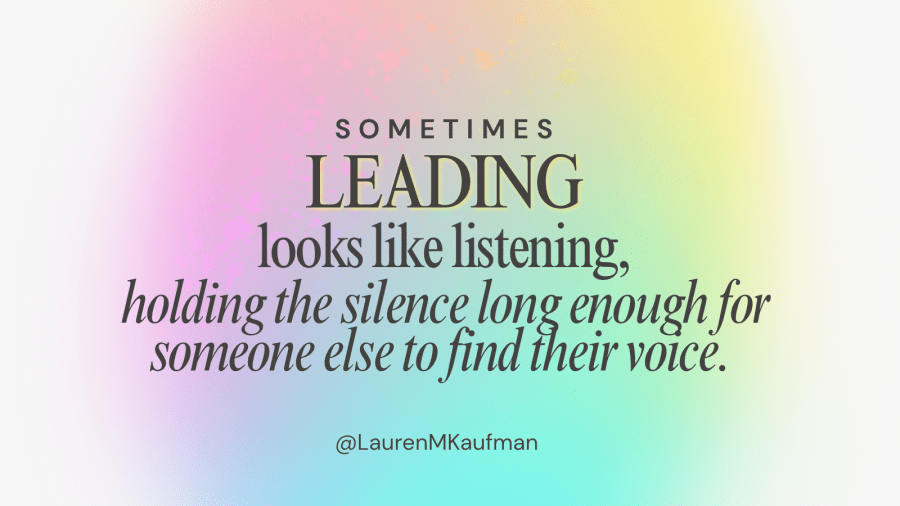
Not every conversation requires a big reaction or even a response in the moment. Sometimes, leading looks like listening, holding the silence long enough for someone else to find their voice.
It starts with listening.
In her new book Strong Ground, Brené Brown reminds us that meaningful change doesn’t come from quick fixes or new tools but from determination, discipline, and connection. As leaders, we build trust when we resist the urge to fill every pause with answers and instead anchor ourselves in presence and curiosity.
There were moments this week when I had a plan, an agenda to move through, outcomes to achieve, a session to facilitate, but in that moment, the plan wasn’t what was needed. Before educators and leaders could embark on the important work we were set out to do, they needed space. So I created it, space to pause, reflect, and breathe knowing that by doing so, our plan would ultimately have more impact.
It starts with listening.
As I listened, I realized that these thoughtfully created spaces are where trust begins. When people feel seen, they start to settle. When they feel heard, they begin to grow. Psychological safety isn’t created through grand gestures, it’s built in consistent conversations that say, You belong here. You have a seat at the table. You matter.
I often revisit sentiments from Will Guidara’s book Unreasonable Hospitality, where he writes, “How do you make the people who work for you and the people you serve feel seen and valued? How do you give them a sense of belonging?” That question sits at the center of leadership. We often think of hospitality as something that happens in restaurants, but it’s also the heartbeat of schools, the way we welcome people into conversations, how we honor their ideas, and how we make them feel part of something bigger than themselves.
The best leaders, as Guidara reminds us, are “unreasonable” enough to believe that small moments of care can transform an entire culture. Listening, following up, checking in, these are not soft skills. They are the daily practices that keep us connected to our people and grounded in purpose.
When we show up with curiosity, we model courage.
When we listen with intention, we lead with humanity.
And when we make others feel seen and valued, we create the kind of environment where people feel a little more calm, capable, and confident in their work.
It starts with listening.
So this week, maybe the most powerful leadership move isn’t to act or decide or direct. Maybe it’s to listen, to hold space, to make others feel welcome, and to trust that through connection, the extraordinary can emerge. Because it doesn’t always start with a strategy. It starts with listening.
Three Human-Centered Moves to Try Tomorrow
- Begin with Presence, Not Plans.
Before diving into the agenda, ask: What’s one thing that’s been on your mind this week? This opens space for connection and helps others feel seen before shifting into content. - Anchor in Empathy.
In moments of tension or challenge, pause and ask: What do you need right now to feel supported? This simple question acknowledges both emotion and humanity. - End with Empowerment.
Close every conversation with: What’s one small next step you feel ready to take? This centers agency and reminds people that their voice drives the work forward.
It starts with listening and continues when we lead with empathy, curiosity, and care.
 Empower. Collaborate. Connect.