As a student, I remember reading classics such as Romeo and Juliet, The Scarlet Letter, and Of Mice and Men. I could follow the plot, but I often struggled to understand why the stories mattered. Have you ever understood the words on the page but still wondered what the story was really trying to tell you?
Everything changed when my teachers and my parents, who were both English teachers, took the time to explain what was happening beyond the pages. They shared the historical context, the culture of the time, and the circumstances that influenced the characters’ decisions, often using images, timelines, and other visuals to help bring the stories to life.
Looking back, I realize I didn’t need more information. I needed help seeing how the pieces fit together. Lately, I’ve been wondering if the same is true of curriculum.
Most curriculum documents do a good job of telling us what students will learn and when they will learn it. But they don’t always make it easy to see how one idea connects to the next or where the learning is ultimately leading.
Maybe that is what happens when learning becomes a story: the pieces begin to connect, and the purpose becomes easier to see.
So, what if curriculum helped tell that story?
A couple of summers ago, our leadership team read Streamlining the Curriculum: Using the Storyboard Approach to Frame Compelling Learning Journeys by Heidi Hayes Jacobs and Allison Zmuda. One idea from the book has stayed with me ever since: curriculum can do more than organize learning. It can help people understand the learning journey.
That perspective shifted how I thought about curriculum. I started asking myself a few questions:
Do educators clearly see the learning journey they are guiding each day?
Do families understand how the pieces connect so they can better support learning at home?
Most importantly, do students understand where they are going and why each learning experience matters?
Karen Eber writes in The Perfect Story that “A great story acts as a roadmap, guiding your audience through information to build an idea, feeling, or inspire action.” I appreciate both the idea and the visual of a roadmap, and I’ve been thinking about the sentiment ever since I read it and saved it in the notes section of my phone. The best curriculum can work the same way. It shouldn’t simply tell us what comes next. It should help people understand where they are going.
I kept returning to these ideas until I had the right opportunities to put them into practice.
Finding the Right Opportunity
I’ve learned that some ideas are ready to be implemented immediately, while others need the right opportunity. That opportunity came this year, when I led a K–5 literacy pilot that resulted in the adoption of a new literacy resource.
While our team gathered feedback from teachers, students, leaders, and families, visited classrooms, examined student work, and studied the materials, I found myself thinking beyond the adoption itself.
Choosing a resource could not be the end of the story. It needed to become an opportunity to make the learning itself easier to understand. That’s when I returned to the idea of storyboarding.
For me, a curriculum storyboard is simply a visual way of showing the learning journey. Rather than seeing isolated lessons or individual units, educators, families, and students can see how the learning connects from beginning to end.
I had already experimented with this idea in other areas of my work.
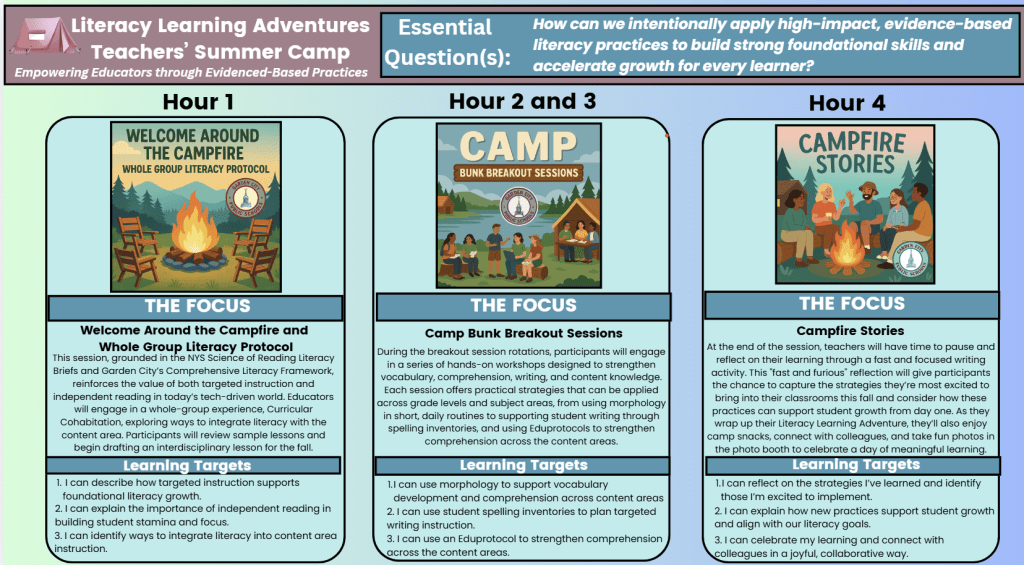
For some professional learning experiences, I replaced a traditional agenda with a storyboard that showed participants the flow of the day. Instead of simply listing times and topics, it communicated how each experience connected to the next and how every activity supported the larger purpose of our learning together.
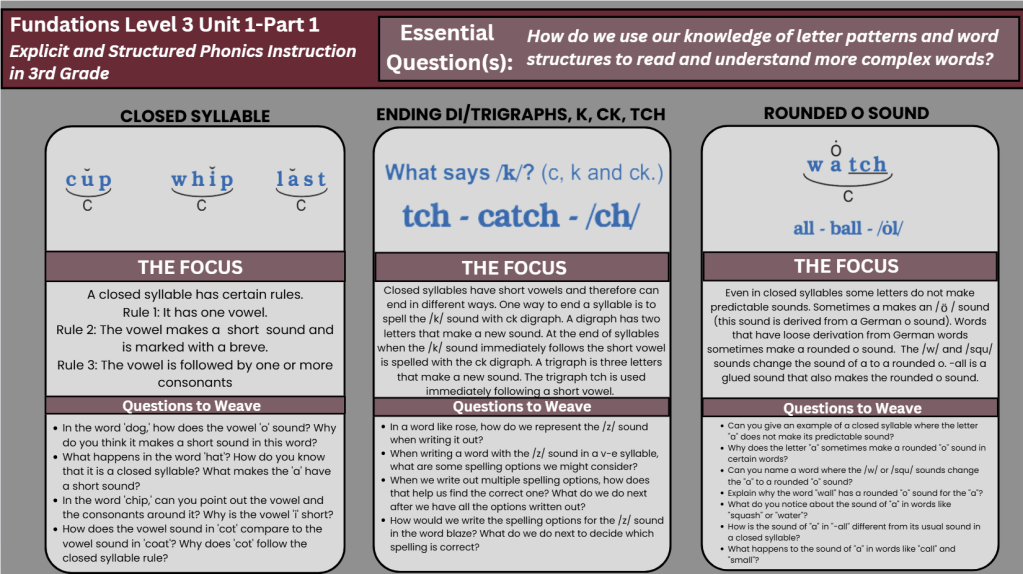
Our team also created storyboards for complex foundational skills units to make the learning progression more visible for educators. They helped break down the skills, show how the learning builds from one concept to the next, and clarify the questions teachers could ask to help students make sense of the patterns they were learning.
Both experiences reinforced something Hayes Jacobs and Zmuda capture in one simple sentence: “People will use what is usable.”
That idea reaffirmed something important for me: a curriculum document shouldn’t simply exist. It should help people make sense of the work.
Building a Shared Framework
As we planned for our summer curriculum work, our literacy coaches and I began applying that same thinking to our newly adopted K–5 literacy resource.
Before our curriculum writers began their work, we created a model storyboard framework for the curriculum writers to follow. Our goal was simple. No matter what grade someone taught, the structure would feel familiar. The content would naturally change, but the organization, layout, and flow would remain consistent.
That consistency matters.
It allows educators to see how learning develops across units and across grade levels. It also makes the curriculum easier to navigate when teachers change grade levels or collaborate across schools. Instead of learning a new organizational system each time, they can focus their attention on the learning itself.
From the beginning, we knew we wanted to create two versions. One would support educators. The other would support families.
The teacher-facing storyboards will provide a visual overview of each unit, including the essential questions, enduring understandings, knowledge-building goals, and core instructional resources. They are not meant to replace detailed curriculum documents. Instead, they will serve as an accessible entry point that helps teachers quickly understand the larger learning journey.
The family-facing version will tell that same story using language that is easier to access outside of school. Families will be able to see what their children are learning, the questions they are exploring, and meaningful ways to continue those conversations at home.
The audiences are different, but the story remains the same: helping people see where the learning is going and how the pieces fit together.
The storyboards are still being developed, and I want our educators and families to experience them first. For now, I’m sharing the thinking behind the process, which feels true to what this blog has always been for me: a place to reflect on the questions, refinements, and lessons that emerge along the way.
As teachers begin using these storyboards and families begin interacting with them, we will continue gathering feedback and making revisions. Some parts will be strengthened, and others will become more streamlined. That’s exactly what proactive implementation should do.
Moving Forward
Recently, one of our literacy coaches shared something that felt important to me. Because the storyboard framework had already been established before curriculum writing began, our writers shared that they were able to spend additional time creating other meaningful instructional materials rather than working through decisions about organization and formatting.
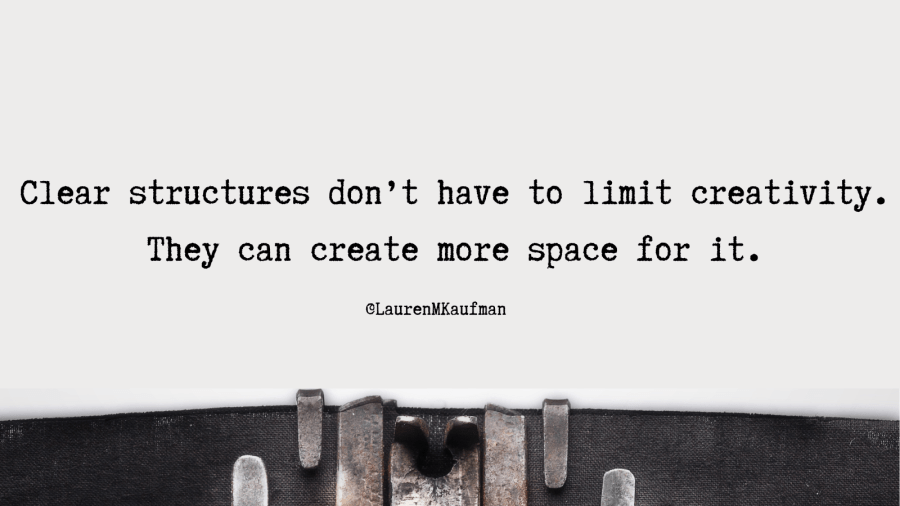
That observation reinforced an important lesson: Clear structures don’t have to limit creativity. They can create more space for it.
Hayes Jacobs and Zmuda remind us that “an engaging curriculum needs room to breathe.” So, could storyboards help create that space? They don’t replace great teaching or thoughtful curriculum. They simply make the learning journey easier to see.
As our team begins bringing these storyboards to life, I will continue reflecting on what we learn along the way.
As a student, I needed someone to help me see the story behind the story. Perhaps curriculum should do the same. When educators, students, and families can see how the pieces fit together, learning becomes more than a collection of lessons.
It becomes a story worth following.
Discover more from Empower. Collaborate. Connect.
Subscribe to get the latest posts sent to your email.

