I recently read the new book, Am I Cut Out for This? by Elizabeth Dampf in two days flat. Not because I planned to, but because I couldn’t put it down. From the very first page, it felt like she was saying all the things so many leaders think, but few ever say out loud.
This book suggestion came to me through my friend Sean Gaillard, who always seems to know what book I need before I even do. I’m endlessly grateful he put this one in my hands.
This wasn’t just a leadership book, it was a mirror. A reminder that we don’t have to lead from a place of perfection. That our doubt isn’t something to fix, but something to listen to. As Dampf writes, “Doubt is a natural feeling, not an illness to be treated” (p. 6). That line alone stopped me in my tracks.
We’ve all had times we’ve told ourselves stories that weren’t real, narratives more rooted in fear, not fact. Instead of staying grounded in what we could do, we could get stuck reflecting about what hadn’t been done yet. But this book reminds us: “The mere fact that you are interrogating your fitness to lead suggests that you are a reflective practitioner, eager to grow to your full potential. Incompetent people don’t do that” (p. 5).
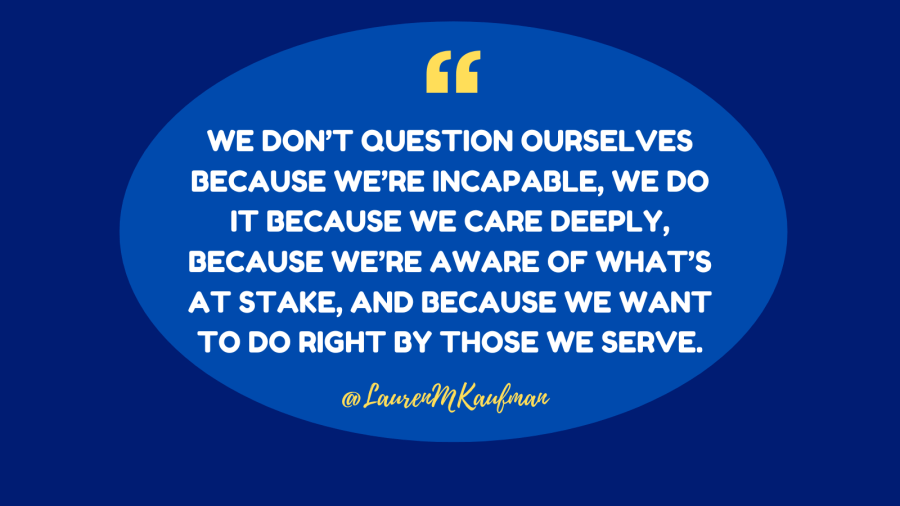
That hit home. We don’t question ourselves because we’re incapable, we do it because we care deeply, because we’re aware of what’s at stake, and because we want to do right by those we serve. As Dampf wisely notes, “For leaders, self-doubt is a symptom of an overactive imagination. It’s an awareness of what’s at stake” (p. 4).
And yet, that same doubt can push us toward growth—if we let it. “Leaders who lean into their own vulnerability, their own potential for error… are the ones who grow the fastest” (p.5). I underlined that sentiment.
Part of our growth as leaders comes from naming the narratives we’ve been telling ourselves. The ones rooted in fear. The ones that keep us small. Naming them is the first step toward reclaiming the moment.
The truth is, leadership will never be neat. “We will fall short of other people’s expectations or fail to rise to certain leadership challenges” (p.4). That’s a given. But what’s also true is this: we can still continue to make progress.
And that’s the shift we can walk away with…progress over perfection.
As Dampf writes, “Celebrating any progress, no matter how minor, will keep wind in your sails and motivate the crew to keep working” (p.20). That’s not just good advice, it’s a lifeline. For us and our teams.
Because sometimes the most powerful move we can make as leaders is to stop trying to prove we’re cut out for this and start trusting that we already are. As I wrote in The Leader Inside, “Every experience you will ever have leads to the type of educator you wish to become.”
And remember: the voice that wonders Am I cut out for this? is often the very one that’s already leading with mind and heart.
You’re not alone. You’re already on your way. I believe in you and I will continue to believe in myself too.
3 Actionable Ideas You Can Implement Tomorrow:
- Name and Reframe the Doubt:
When doubt creeps in, pause and say: This is my awareness speaking, not a weakness. Reframe it as a sign you care deeply and are growing. - Celebrate the Small Wins: Loudly and Often:
Progress fuels morale. Start tomorrow’s meeting with one tiny win. Name it. Celebrate it. Watch how it shifts the energy in the room. - Co-Own the Work:
“Sell the collaboration as much as the plan.” When discussing any priority, highlight the collective effort. It builds trust, boosts buy-in, and reminds everyone they are part of the change.
 Empower. Collaborate. Connect.