As a new school year approaches, I’ve been thinking a lot about the important priorities that need to be moved forward. If you are reading this, I know you are too. Education is a busy place and it requires the special attention our students and teachers deserve.
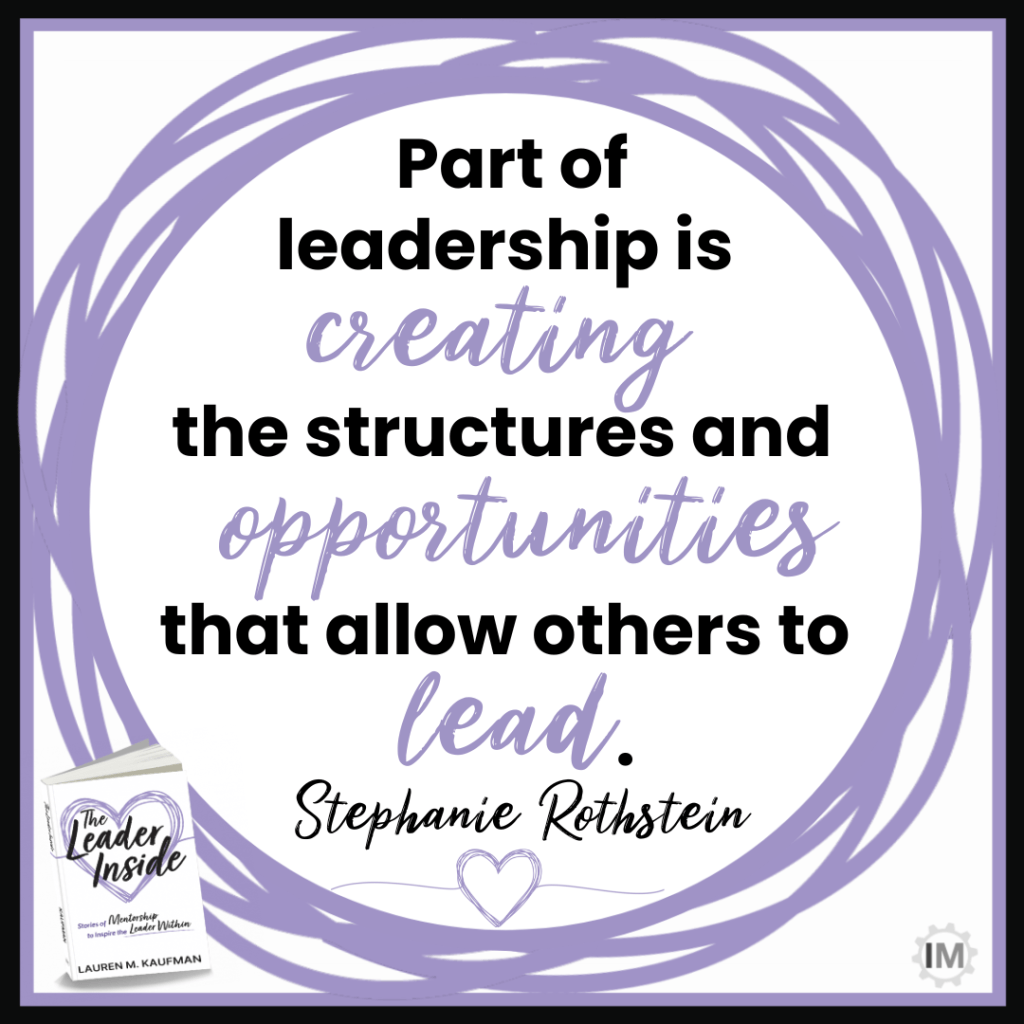
Since I often write the posts I need myself, allow me to remind us that when you are in a position of leadership, you don’t have to know more than the people you lead. Instead, you can recognize and celebrate the unique talents of others, using these strengths as an invitation to foster collaboration that leads to success. As Stephanie Rothstein shares in my book The Leader Inside: Stories of Mentorship to Inspire the Leader Within, “Part of leadership is creating the structures and opportunities that allow others to lead.” You do not have to do this important work alone, nor should you.
As we all move towards embarking on our priorities, let us reflect on a question I have been asked in a variety of spaces: “Lauren, what does success look like to you?” Most likely, you have been asked this question too, and if you haven’t, perhaps you’re thinking about it now.
The truth is, I believe that there is no correct answer or clear path to what success looks and feels like. Success is not linear and cannot possibly be the same for every human being. It is a pursuit that isn’t always tangible or easy to measure.
For me, what I have come to understand is that the path to success requires a certain kind of vulnerability and courage to ask for help. This may sound simple, but it has been the greatest lesson I have learned in every role I have served in. In the past, I made the mistake of thinking that asking for help would make others think I didn’t know what I was doing, making me look incompetent. Can you relate to this sentiment?
As Simon Sinek shared in a recent talk, “We don’t build trust by offering people our help, we build trust by asking people for help.” For example, recently I was working with a colleague to plan a series of professional learning experiences during the school day. This endeavor required careful planning and consideration as individual buildings will need to request substitute teachers to cover classes, teachers will have to leave thoughtful plans, and the professional learning experiences must be worth the teachers’ time since they are leaving their classrooms. However, if done meaningfully, it will be a huge investment in the learning deposit box, because who will benefit in the end? Kids!
With that said, my colleague and I asked for the support of another colleague who is a master at scheduling and creating systems and structures for this work to happen more seamlessly. She openly shared her successes and challenges, making our work more impactful and we actively listened and accepted her feedback. That’s true collaboration and leadership!
Based on this experience and others, I have come to understand that on the path to success, working in isolation will not lead you to the desired destination the same way working in collaboration will. For me, success is building enough momentum to keep a priority moving with others, even when you have moved on to something else. This collaborative momentum ensures that our shared goals continue to progress, driven by the collective effort and support of the team.
So, how can you build enough momentum to ensure your priorities are moving forward without your presence?
Well, it starts with understanding who you are. To me, if you don’t understand people, you don’t understand what it means to be in the education space. Stop and think for a moment. You are most likely surrounded by people who would love to help you succeed but didn’t think you needed it.
Let’s remember that on the path to success, it’s okay to fall and fall a lot. It’s okay to ask for help. It’s okay to pick yourself up and try again and again until you accomplish what you had envisioned.
May the times you fall be a reminder that you have tried something new. You will get up and try again. That’s what shapes the educator you are becoming. That courageous spirit is what makes you a great educator. That’s what makes you a great leader.
With this in mind, as you are planning to move your priorities forward and are determined to ask for help on your road to success, consider the following questions George Couros shared in his most recent blog post, The Confident Leader:
- Who do I surround myself with and gravitate towards?
- When challenged, how do I react?
- When new ideas are shared from others, how do I show value and actively listen?
Moving Forward
As you move forward, allow me to remind us that when you are in a position of leadership, you don’t have to know more than the people you lead.
So, let’s ask for help. Let’s try new things. Let’s fall and fall often. Let’s pick ourselves up and ask for help again.
Through this process, you will grow together, move your priorities forward, build momentum, and support one another to achieve what success means to your team. You’ve got this!
Click HERE to learn more about The Leader Inside: Stories of Mentorship to Inspire the Leader Within
 Empower. Collaborate. Connect.