Nurturing Leaders: Embracing the Next Generation
As you live in the world of education, you may have noticed that there are limitless possibilities for shaping and developing the mindsets, actions, and choices of future generations over the course of their career timelines. You have unique opportunities to create experiences that empower learners to choose a lens that paves the way to purposeful pathways of happiness and success.
Since education is in a constant state of transformation, it is critical that you (educators) are provided with the essential tools and support systems to navigate the changes, challenges, and systems you live in. Those supports can help your colleagues to develop agency, self-efficacy, cultivate the confidence to share their own strengths, and unleash the talents of every human being they will ever encounter on their personal educational paths. You also recognize that time is valuable and can be difficult to balance. Every minute, every interaction, every moment in your days are precious. However, out of all the ways you can spend your time, the act of mentorship has one of the highest returns on investment because you are shaping the next generation of leaders.
Who is On the Bus
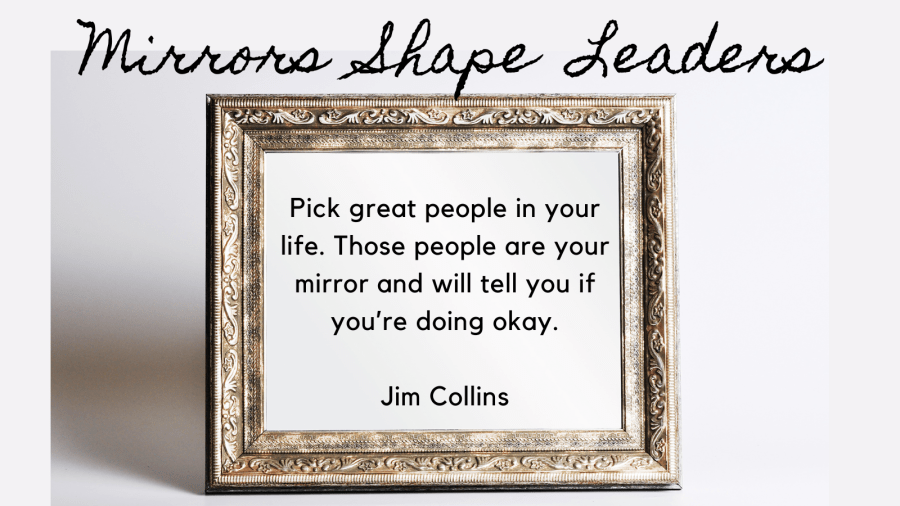
There is no magic wand for mentoring. The success of strong mentor/mentee relationships rests on the shoulders of WHO. WHO puts in the effort, WHO has sensibility, WHO has the dedication, WHO commits to the process. All of these things matter, but there is a little bit of strategy that goes along with this too. I mention strategy because it is vital to consider WHO will be the right people to guide and create strong foundations for new teachers and leaders that lead to long, meaningful, impactful careers. In Brené Brown’s Dare to Lead podcast, titled Brené with Jim Collins on Curiosity, Generosity, and the Hedgehog, Jim Collins discusses the importance of inviting people into your life who will open the doors to greatness. “Pick great people in your life. Those people are your mirror and will tell you if you’re doing ok.” The idea of viewing the people in your life as a mirror of yourself only magnifies the significance of WHO is selected to be placed in a position to mentor, inspire, and influence teachers during the induction process.
Mirrors Shape Leaders
In my upcoming book, I delve into the profound connections I fostered with individuals I deeply regarded as mentors. These remarkable individuals possessed the exceptional ability to recognize the leader living inside me. Moreover, I recounted some of the invaluable lessons gleaned from encounters with individuals who, for various reasons, may have refrained from fully harnessing my leadership potential. I am genuinely appreciative of these experiences as well, for they played a crucial role in propelling me forward, enabling me to wholeheartedly embrace the successes and challenges that awaited me, unveiling new opportunities. Undoubtedly, they have all played an instrumental role in shaping the leader I am becoming.
Recently, I had a profound interaction with an aspiring leader. As I write this, I find myself reflecting on my own journey as a new administrator, having weathered significant changes in the past few years. Whenever an educator reaches out to me to be a mirror and seeks support, I prioritize connecting with them, offering a listening ear and a beacon of hope. During one such conversation, an aspiring administrator who I have been mentoring confided in me, saying, “Lauren, I’m unsure if I’m truly cut out for leadership. Despite my efforts, I always seem to fall just short of reaching the finish line. I think it might be time for me to take a break from applying.”
This remark brought back memories of my own handful of interview experiences and the moments when I questioned if leadership was truly my path. The weight of disappointment pressed upon me, but I can still hear my mentor’s voice, reminding me that this is all part of the process. I responded to this aspiring leader by saying, “No… you have to keep going. There is a District who will see that you are the right person who is meant to be on their bus. This fleeting moment of rejection and doubt is an opportunity for a new door to open. So, remember that this setback is temporary… It’s a marker on your journey. Keep pushing forward, and the right opportunity with the right people is waiting for you.”
In his book Good to Great, Collins reinforces this idea by discussing how getting people committed and aligned with a vision and direction will lead to avenues of great realizations, progress, and prosperity. Getting the “right people” on the bus because of “who” is on it rather than being concerned about “where” it is going, makes it easier to change your course. “For no matter what we achieve, if we don’t spend the vast majority of our time with people we love and respect, we cannot possibly have a great life. But if we spend the vast majority of our time with people we love and respect-people we really enjoy being on the bus with and who will never disappoint us-then we will almost certainly have a great life, no matter where the bus goes” (p. 62).
Moving Forward
Recently, I received a call from that same aspiring leader. “Lauren… you were right. After our conversation, I picked my head up and held it high. I learned from those disappointments and now an amazing District wants me on their bus. I did it. Thank you.”
By nurturing the leaders around you and embracing the next generation, you can navigate changes, challenges, and systems to provide the best support for your colleagues. It will always be crucial to choose the right people on your path to guide you on your leadership journey. Keep surrounding yourself with people who act as mirrors, encourage you to reflect on your growth, and show you that there are other possibilities and more open doors leading to the right opportunities.
Actionable Ideas:
Once you get the right people on your bus, you will work towards understanding that the mentors you pair them with are crucial to their success. The mentor/mentee relationship is also symbiotic in nature. The qualities and attributes in both mentees and mentors are synonymous. As you seek mentors and embrace mentorship, approach it from a holistic lens. You have the power to build social capital and unlock human potential. Great leaders have the ability to leave everlasting legacies in the hearts and minds of everyone they serve. This makes the induction years a critical component of a leader’s career path.
That being said, I created a blueprint to sustain successful mentor/mentee relationships by embracing the 6cs: Connect. Communicate. Collaborate. Circulate. Cultivate. Celebrate.
Connect: Get to know each other on a personal level. Share your stories. This will transform the path of a mentoring relationship because you are showing the other person that you truly care about them as humans first. This is a window into a person’s journey which enables you to make more intentional and targeted inquiries over the course of time. In the podcast mentioned above, Jim Collins says “Real conversations happen at the feeling level…The quality of the day is not what you think about it, it’s what you feel about it.”
Communicate: Although informal interactions will naturally be embedded into the mentoring experience, schedule protected time to communicate on personal and professional levels on a regular basis. This protected time values the process and provides a space to ask questions, share knowledge, and learn from various experiences. Come up with mutually agreeable ways to communicate as there are many avenues to reach out to one another. Talking through and reflecting on experiences are important parts of the growth process.
Collaborate: Work together to strengthen and share best teaching and learning practices, how to navigate relationships, and the day-to-day operations. Collaboration can transpire synchronously by interacting in real time face-to-face, in online meetings, texting, and/or instant messaging through various learning management systems. It can also take place asynchronously by working independently and then uploading documents or annotations to shared workspaces (e.g. Google Docs). The benefits of Mentor/Mentee collaboration are exploring new and better ideas, teamwork, discovering new solutions, and embedding new perspectives into practices.
Circulate: Mentors can be well-connected as they have been in the education field for some time. They should invite their mentees into various professional learning communities (PLCs) and encourage them to think and look beyond their school organizations for ideas by expanding their professional learning network (PLN). As a mentor, you can also broaden your own network by connecting with other mentors and great educators, while also leveraging the opportunity to network with their mentee’s connections.
Cultivate: Mentees come with their own expertise and gifts to share. Help them unwrap those gifts, passions, and interests. Capitalize on, cultivate, and learn from their strengths. Ask questions and allow them to reflect on their areas for growth and development. Use this as an opportunity to let them come up with actionable steps for improvement while providing direction and insights. These interactions are cyclical in nature and should be continuously revisited.
Celebrate: Mentors serve as the greatest and most impactful support system. They should encourage and cheer on their mentee for taking risks and believing in themselves. Celebrate successes big and small and use failure and change as opportunities for growth. Human beings thrive on recognition. When they feel validated and valued, they continue to approach their work with passion and purpose!
 Empower. Collaborate. Connect.